Showing posts with label family. Show all posts

Day 203: Why do Teens Lie to Their Parents?


When I was a teenager I'd stay out late and lie about it. I would sneak out of the house in the middle of the night to hang out with friends that I wasn't allowed to because 'they were a bad influence'. I drank and did drugs. And I lied bout it all obviously because if I didn't, I would have been punished. And I wanted to try/do all these things because there were many examples in my life that was saying these things were apparently what you want to do as a teenager. My mom would say those things are bad, you're not allowed to do them, but I wouldn't listen because I didn't trust her, because she would get emotional and judgmental and that obviously doesn't look like a sound supportive being who I could trust for practical advice. She just didn't have the effective understanding and vocabulary to effectively express things to me, like an equal talking to another equal who is new to the world and giving practical support of how this world operates and how consequence works in reality. She wasn't trained to be a parent because we don't have effective training in parenting for everyone.

There is the tendency to want to 'hide' what is wrong with ourselves/the world from children when they're very little, or to not talk about such 'negative' things, in order to allow children to have as a 'good' a time as possible, and then what happens is they don't have any practical idea of the dangers out there or the consequences we can create for ourselves.

What we also tend to do is to 'create consequences' for children, which are then like 'fake' consequences, things like taking away the things they like to do like use their phone or the internet or the tv, but these so-called consequences are consequences that we did unto them, they are not the Actual consequences that would result from their behavior. So when we do this they are not learning about what their actual consequences of their actions are, they are only learning that if/when they are 'caught', by you, doing certain things, that then You will do something to them, or take something from them. So then what happens is you get in the way of them learning about actual consequence, because they are only now learning what you might do to them.

So the child actually has, from that perspective, very common sensical reason to lie to you – to avoid your punishment. So to tell the child not to lie to you, or it's not right to lie, is like, rather pointless because they found a benefit to lying, which was to get themselves out of punishment and get to do what they think they want to do, sometimes. So to say there is consequence to lying to you isn't going to make much sense, because to the child it will seem there is more consequence in not lying to you. Also, in the way the world is, one may find it necessary to lie in some circumstances. Because we as human beings are not yet trustworthy enough with each other to be able to just be honest all with everything. So, you don't want to form a morality toward lying as being right/wrong / good/bad. It is preferable to not lie of course.

So things like taking tv away or 'being grounded' for example, are actually 'punishments'. They are not the natural actual consequences that would result from what they are doing. Like for example, if you stay up late a lot it can affect the development of your body and lead to issues down the road, as the body depletes itself from not getting the rest it needs to rebuild itself from the day's living. Not – if you stay up late you will be grounded. That doesn't make sense. That doesn't give any practical understanding of the consequence they would create for themselves by not sleeping properly, that is the consequence You will create because You want them to sleep and not stay out late, so then it is about what You Want and not about what is Best for Themself.

As parents we have a tendency to attempt to control, because we don't believe anything else will work. We don't believe that a child would respond to common sense, because we haven't aligned ourself with common sense yet. So we think we have to 'put a foot down' and take control. So you're essentially demanding that they comply, and that is very unlikely to have a positive result. What it's going to look like to the child is that You want something of/from them, You wanting to control them/their behavior to the result You want. They are not going to see it as trying to prevent them from experiencing consequences in reality, as what is best for Them. Because that is in fact essentially what it is, it is wanting/demanding/expecting certain behavior from the child. That is in essence wanting to control another being, and most beings are not going to respond well to being controlled. I certainly didn't, if you have had experiences in your life where another was trying to control you, you can check what effect that had/how did you respond to that.

So we've got a ways to go in correcting ourselves, and the children are going to suffer through that, as did we also as children, but we'll walk ourselves out of this step by step until it's done, and we can challenge ourselves to make it as fun as we can, by not making things personal/judging. We have now the tools and just have to walk it, educate ourselves to become practical beings grounded here in reality.


An important point within this, is to look at everything from the perspective of what am I living, instead of what I'm expecting another to live for/toward me. And checking all points that come up, like if I am mad at them for lying – how/when/where do I or have I lied? Or if they aren't respecting me - how/where have I not been respectful? Where respect would mean treating another as my equal. There is the tendency to place all these expectations on another, without focusing on ourselves and our own living and behaviors.

And we need to educate ourselves on the actual consequences so we can effectively explain them - not the consequences we would create for them ourself. Give the child the common sense, so they can reason for themselves what is the best course of action. And if they make a mistake – do not judge them. And realize, they have not hurt you, they only hurt themselves. When we make it about me and what They're doing to Me, then it is about control and manipulation and enslavement instead of allowing a being their individual life and learning process. It is like the 'you can lead a horse to water but you can't make him drink'. We can show the children where the water is, but we can't make them drink it. And the more we would try to force them to the more they would resist, because then it looks like we have some personal agenda or investment in it, and it is going to seem fishy. You've got to give the child their space to choose. Trust in a relationship is indeed something that is built, but you have to give trust at first for it to even be possible for trust to emerge. You have to trust the being, not to act how you want them to, but trust the being to hear common sense, and to understand the choices they face is always to do what is best for them or what is not. Maybe they will, and maybe they won't. But it must be up to the individual if we're to live as truly equals.
Enhanced by Zemanta

Day 188: Rewards of No More War Casualties

So we’re now continuing from the last blog post on the topic of War, Day 186: WAR: What is it Good For: Killing People, and WORSE, in which we left of where we we’re going to start looking at the Rewards to no longer having Human Casualties as a result of War. And going beyond just the simple, obvious Reward of no longer having people being hurt or injured or killed, because that’s not really actually getting into it, and really looking at in specific detail what all the problems are that are a result of Human Casualties in War, and thus exactly what do we stand to benefit when this is no longer happening, when we are no longer having Human Casualties from War.

So, basically, what happens when people become casualties of war? I mean, these people belong to families and they have friends and relatives, so when they become injured or die as a result of War, this tears up entire families. Here you have that familiar picture one can imagine if you will, of in the United States for example, and where one has seen this in movies or news stories for example, when there’s a member of the family who is a soldier in the military and has gone off to war, and perhaps it’s the husband, or the wife, or a son or a daughter, a mother or a father, and then comes that fateful call, that their loved-one is ‘not going to be coming home’ from the war.

Or their loved one does come home, but it’s a bittersweet reunion, because they’re coming home with some sort of injury that they didn’t have before, and life is never going to be the same again, for that whole family. Now they all have to learn how to deal with the injuries received as a result of being injured in War. So this tears up families, and in some cases you have both parents in the military and both go off to war and die, and then their children are now left orphaned.


And that's only looking at those who are in the military, and there is also all the many many civilians as well that are injured and suffer all kinds of atrocities as well, and that is even more torn up families and lives.

And this affect families generations down the line, it affects our very relationships toward each other as countries and as people, where the image of one’s injured or dying loved one becomes etched in the mind and connected to a hatred of the opposition. So, literally once we stop killing and injuring each other, we’ll stop hating each other for doing so, and stop passing on Legacies of hatred between cultures and countries that further Fuel the Fires for future Wars, and that create a lot of unnecessary conflict.


Just imagine all the work and effort that will be prevented of having to try to care for the unnecessary injuries. All the work to deal with dead bodies and trying to keep conditions sanitary and free of disease – none of that would even be taking place. You wouldn’t have to live in places where that happen, or read about it or see pictures about it, because it won’t anymore exist. We will have more human beings that are effectively functioning and not being pointlessly handicapped in their ability to function. This would also mean a lot more people will be more functional and thus still be effectively functioning members of society, so instead of literally in essence shooting ourselves in the foot by shooting each other up, we'll no longer be putting people in positions of having to be dependent on others for their very survival and living.


Imagine all the individual experiences that those who are a casualty of war go through, whether killed or injured, these experiences will no longer exist. And then we will actually respect ourselves, because we will be beings that would not allow such atrocities to take place. And have the security and peace of mind to know that, such an experience could never happen to me, because I made sure that such experience does not exist anywhere. And we won’t evermore have to think or fear that such things could happen to us or our loved ones.


In the next blog post in the series on War, we’ll walk some Self Forgiveness statements in regard to how we’ve accepted such atrocities to become such a part of every day reality, and allow it to continue despite everything we stand to gain by stopping and ending it once and for all.


Enhanced by Zemanta

Day 174: $50,000 Joke on Child Shows Flaw in Capitalism

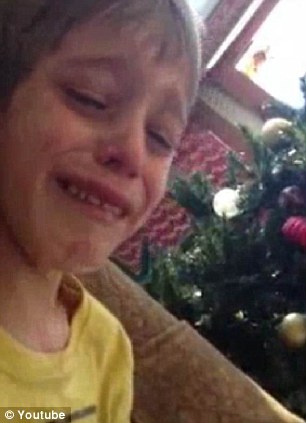
'I'm horrible!' Boy, 8, sobs after his mom convinces him he'd accidentally bought a Ford Mustang while playing with her iPad 
 

When Paula Papen caught her eight-year-old son playing around on eBay on her iPad, she concocted one way of making sure he took care of grown ups' toys.

With her camera rolling, the mother from Hot Springs, South Dakota convinced her son Kenyon that he had accidentally spent $50,000 on a Ford Mustang that could not be returned.
But while she may have wanted to teach him a lesson, she cannot have predicted the youngster's emotional response.

A video of the boy sobbing - before realising it was just a joke - has now become an internet hit, with hundreds laughing along with the Papens, while others have lambasted the prank as cruel.
After seeing that he had searched for the vehicle on eBay, Mrs Papen switched on her camera and asked her son why he had made the lavish purchase. 

'I did? Oh can we cancel it? How?' Kenyon responds, jumping up from his seat.
When she tells him that the purchase is final, he breaks down in tears.
'Oh no, I'm horrible,' he wails. 'We'll have to sell everything. I'm horrible!'

What’s not even questioned is why it is that a child would react this way to being told he’d accidently bought a $50,000 non-returnable purchase on ebay. When we know that if this actually happened, for most families it would be devastating. Most people do not have $50,000 to lose. Children are not oblivious to the financial situation of the family. I grew up in a family that was not well off, we could afford what we needed and not much beyond that. Money was always an issue, we were always on a tight budget. If thought I had done something to cost our family $50,000, I probably would have gone into the same reaction, extreme guilt for the misfortune that I’ve brought upon my family. Yet we've just accepted this as a part of life that nobody even questions why survival isn't a basic right, and that we really shouldn't be living in fear of whether or not we'll be able to survive or have the money to get the things we need or that make life effective and enjoyable.

How is it that we’ve let our survival be such a fickle thing, that things like this actually do happen all the time, mistakes are made and people lose money and suffer for it. If you look at our economic system at large, this is what we’re actually doing to many beings within the current system. To all the beings that aren’t being effectively supported in the current system. They are losing out because of our mistake of not ensuring that our system is effectively providing everyone with their basic needs.

See what even a child understands is that money is required to live, and if you don’t have it, you suffer. Yet we as adults, seem to have missed that point, because we allow billions to live in lack, even though we know that this means suffering. Suffering which can be prevented by simply ensuring that everyone is supported effectively in the first place. The fear should not even exist that one might lose their right to survive by losing money, as whether or not someone has money does not change whether or not they need the basic necessities to survive.

Whether or not you have money, you need a house, you need food and water, you need proper healthcare, proper education. Thus there is no reason to ensure that everyone has enough money to get what they need. And to not ensure that everyone has enough money to get what they need is to allow them to suffer. Which is just stupid, and pointlessly cruel. Obviously, no one wants to be in a position where you don’t have access to that which you need. No one would trade places with a starving person, so why do we allow starvation to even exist?

Capitalism as an economic system has made life better for some yet while disregarding the majority of the earth’s population and putting them into poverty. It’s time for Capitalism to be corrected to function according to its own principles to make it is a system that actually works for everyone. Where one does not have to fear for survival. No child should have to fear that their family may have to suffer for not having money. There is no reason for anyone to suffer, when we live in a world of plenty when we use the earth’s resources in a sustainable and responsible way. Children should not have to go through the fear of financial instability and fear of surviving. It shows that we humans have not yet effectively sorted ourselves out and sorted out our economic system so that it is functioning effectively.

If you take for example how the human body itself functions, where the blood which is like the life force of the body, is distributed to every part of the body and all the cells to provide nourishment to all parts of the body that make up the whole, and compare this to money as the life force that moves in the world system to provide nourishment as the distribution of resources, which is, unlike how the body does with blood, not being effectively distributed to everyone.

Featured Artwork by Marlen Vargas Del Razo
Thus the correction of Capitalism has begun within the initiative Equal Money Capitalism, to correct Capitalism to stand according to its own principles to make it a system that works for everyone. So that no one has to fear for their survival. I mean, if a system is really working effectively, then there would not be such extensive fear of survival, that a child would think they have brought suffering to their family through a simple mistake. And the fact that it does happen where people make mistakes and end up losing money and suffering for it, shows that we have allowed things to get out of hand where profit has been given more value than life, and thus why life is being abused in every way possible for the sake of profits.


To read more about Equal Money Capitalism, follow the Economist’s Journey to Life blogs:
Day 162: EQUAL MONEY CAPITALISM - The Way Forward
Day 163: Equal Money Capitalism - Redefining Profit
Day 164: Equal Money Capitalism - Preparing the Road for Change
Day 165: Equal Profit Share and Equal Money Capitalism
And more to come..
Enhanced by Zemanta

Day 170: Board Games as Tools for Brainwashing

Who played board games over the holiday? I did. I’m sure a lot of people did, were you one of them? It’s quite a tradition when your family gets together for the holiday, looking for something fun and entertaining to pass the time. And we always look toward what we already know. Let’s see, what do I know of that would be fun to do? And we peruse our memory for options. And board games popped up, as we likely spent some hours in our childhood playing a variety of the board games that were available.


It was while playing one of these games, that I remembered how I used to experience myself during what was like a ‘family ritual’ sort of thing, as it was ‘more’ than just simply playing a game, as it’s like you bring all the memories of previous games with you, and how you experienced yourself then, and what happened, did you win, did you lose, did it heated, was there competition and insults thrown ‘in jest’, etc. I would have all kinds of experiences within myself in relation to what would happen in the game. Was I ‘winning’? Was I losing? Did another person just make a move against me to put themselves in a better position? Was it just going bad one turn after another and now it’s like there is no hope for me to win?

And I’d experience all kinds of emotions towards these experiences. I’d feel good if I was winning, bad if I was losing, angry and hurt at another who has ‘taken advantage’ of me in order to help themselves, depressed and apathetic if I was doing bad one turn after another. Confused as to why we as family members, who are ‘supposed to be on the same side’, because it’s how families are presented by/within society, as like, the one’s who’ve got your back, the one’s who you can count on, you can trust, will be there for you through thick and thin, and on and on with the clichés about family, and yet, here they are not supporting me, by trying to beat me, and I found this very conflicting. But everyone acts as is it normal, because it was what they learned as children, and now I was learning it, and then I would pass it on to the next generation.

Every time we’d go to play a game, all those previous/past experiences/memories would come up, it’s like they’re ‘all here with you’, and activates a specific ‘board game’ character that activates when the moment someone suggests the game and speaks its name out loud is like the trigger, and the memories would come flooding up as the game is brought out and we’re setting it up and passing out the pieces. And I can see there are even be character variations according to what particular game is being played, all depending on past experiences/memories, all originating from the earliest experiences/times I played the game. Like the first game is where the main character gets formed which will then come up for each following game, and then get added onto/shaped further as one has more and more experiences with that game.

I remember this actually quite clearly, with the game Monopoly for example, as that was one of the first games that I played with family on a family vacation/holiday situation. What this shows is that we were not born knowing how to play a board game. And we were not born with a specific relationship toward playing board games. This is developed through experience. For example, I didn’t ‘know’ what was fun about board games until it was shown and told to me. I was told the point of playing is to win, and I asked why? ‘Because it’s fun to win’. Oh, ok.. As children we are like sponges, trusting the adults around us and just absorbing what is told to us, and taking it for granted that it must be correct, and not questioning anything that doesn’t seem to make sense out of fear, due to previous experiences of questioning things that did not go well, because adults have a tendency to react in all sorts of ways when being asked questions about things that don’t make sense, because in that moment, they’re faced with the truth of themselves, and that they are living something that does not make sense that they were too scared to question as well.

So I ‘learned’ that it’s fun to ‘win’. And I also learned that according to the design of most board games, winning means everyone else ‘losing’. Everyone else has to ‘suffer’ so to speak, for only one being to ‘win’ and have the positive experience. And this is just like how it is in the current system, where 99% of the population does the majority of all the work, so that a 1% can live in luxury. Thus you have most people in the negative/having a negative experience, and only a very, very tiny few in the most positive experience. Just like ‘in the negative’ as a reference to debt, because in the current system money is what gives you a positive life, and where most are in the negative as debt, while only a very few are ‘in the positive’, as having enough money to be financially secure and can buy a life of luxury.

So at a time when I was young and not yet exposed to our economic system, as my world was as yet mostly comprised of my family and going to school, and I was not yet a ‘part of the system’ as going out there and ‘fending for myself’ within finding a job placement within the system, board games served as an introduction to how our current system works. So that when I do get ‘out there’ into the system, I’ve already accepted the basic principles it’s founded on, as I’m already familiar with the concepts, which I learned from playing board games, that are based on the same model, of being in competition with each other, and where there can only be a few ‘winners’ while most will have to be ‘losers’, and that that’s the way it is, and that it’s ‘fun’.

Thus, board games are a great way of introducing concepts to children, who are at a stage where they are still yet learning about the world and reality, and how it functions, so once they get into the system, it’s like they are already used to it, and have already accepted it as ‘normal’ and ‘the way it is’.

Within the next post, we’ll continue to open up this point of board games as tools for brainwashing ourselves as children to accept the current system, and eventually take a look at how playing board games can actually be reversed into tools for expanding one’s awareness of oneself, and one’s reality.

Related Articles:

  • Imagination and TI(e)-ME: DAY 256
  • 255. Your Life has been a Lie, What is Real Then?
  • 12/25/12 Christmas Day
  • Day 154 - Ho Ho Holiday

  • Enhanced by Zemanta

    Day 133: Validation Character: Consequence Dimension (Part 2)


    Featured Artwork by Joe Kou

    This post is a continuation to:


    And now, we’re continuing from where we left of on Day 131, with walking Self Forgiveness statements on the Consequence Dimension.

    Consequence Dimension: Self Forgiveness:
    I forgive myself that I have accepted and allowed myself to neglect my responsibility of effectively interacting with others here, within the realization that I am not alone here, that I do not exist all by myself, but through the combined effort of many beings, and thus as my life depends on other beings, and because there are many beings within my day to day reality that I interact with, my ability and my application within how I approach those interactions that I face, directly affect my world, my experience, as the relationships that I develop, which thus also affects my future.

    I forgive myself that I have accepted and allowed myself to still live like I am still a child, within wanting to ‘just do what I want’, and not have any obligations/responsibilities, within this not realizing that to live in such a way is to actually sabotage myself and my life, as I manifest consequence by avoiding/neglecting my responsibilities and my relationships with others, and thus, I forgive myself that I have accepted and allowed myself to sabotage myself and my life, by not taking my relationships and the relationships I form, seriously, within seeing, realizing and understanding the consequences I’m manifesting by placing my wants as ‘how I want to experience myself/don’t want to experience myself’ as my first and foremost consideration, instead of considering All Life here equally.

    I forgive myself that I have accepted and allowed myself to not see, realize and understand how by participating in this character/personality and letting it get to the extreme of not wanting to go through with the interaction, that I’m placing myself in a position where if I still go through with the interaction, it is not effective as I am not actually here and present with the being, but am distracted within/by my own personal experience within allowing myself to go into and be ‘taken over’ by this character/personality.

    I forgive myself that I have accepted and allowed myself to not see, realize and understand that the thoughts/imagination/backchat/reactions/behaviors/fears I experience toward meeting/interacting with others is really my own creation, and nothing to do with other beings, and that this means that I can actually take directive control and stop all the dimensions of this character/personality as the thoughts/imagination/backchat/reactions/behaviors/fears, through assisting and supporting myself within the practical application of writing, self forgiveness, and corrective application, and simply be here interacting with other beings, as I realize that as I continue to no longer participate in the thoughts/imagination/backchat/reactions/behaviors/fears, they will eventually fade away as I no longer feed them/give them power, and that I will remain here, as breath, constant and stable.

    I forgive myself that I have accepted and allowed myself to not see, realize and understand how by participating in/as this character/personality within ‘not wanting’ to interact with others, especially with those I haven’t met before/am meeting for the first time, that I am actually responsible for humanity existing as this same point where we have become more and more isolated from each other, resistant to communicating and interacting with one another, to the point where we’ll typically only interact with a very small circle of ‘family and friends’, and disregard/not take into consideration all the rest of the billions of beings existing here.

    I forgive myself that I have accepted and allowed myself to not see, realize and understand that a major aspect of why we for the most part only interact within a small circle of ‘friends/family’ and disregard all else/are wary of all else, is the result of not being able to trust one another due to the inequality of the current system, because we haven’t ensured that all are equally supported, and placed ourselves in competition with one another for our survival, and thus we can’t actually trust each other. I mean, in a lot of cases one really can’t even trust one’s ‘friends/family’, for that very same point. Have a look at the example of someone who wins the lottery, and then their friends/family suddenly become really ‘friendly’ or resort to whatever tactics they can come up with to try and get in on the winnings. This is really showing the extent of the obvious problem of inequality, where even friends and family can’t trust each other, because survival is the priority consideration, since you’re not guaranteed the support you require, which creates a lot of unfortunate situations where some have to steal just to survive, or where they steal in order to have as good a quality life as others have.

    I forgive myself that I have accepted and allowed myself to not create a society and economic system which assists and supports us to develop effective relationships with one another, where actual trust can exist, because we have proven that we are trustworthy, within proving that we are beings that Care, by ensuring that all are cared for. As, if every being here stand and live in consideration of all beings here, where we wouldn’t let one being starve or suffer unnecessarily when it can be prevented and stopped, where every being were aligned to the principle of what is best for all, then everyone would really be trustworthy.

    Enhanced by Zemanta